
Start with a story that belongs to the location
Choose a subject the property can explain in one sentence. A coastal hotel might draw on shoreline contours, working harbors, or local gardens. An urban property could reference neighborhood architecture, music, or a distinctive street pattern. An inland retreat might use regional landscapes or the details of a local craft.
Specificity matters more than the number of landmarks. Instead of a collage of everything nearby, select one central idea and build related compositions around it. Verify historical names, dates, and imagery before they become part of the artwork.
A real hospitality example: landscape as room identity
In an August 2026 project report, Wall&decò described its work at Ameron Lucerne Hotel Flora, within an interior concept by Monoplan. Its bespoke guest-room wallcovering uses a hand-drawn panorama inspired by Lake Lucerne’s surrounding landscapes.
This is another company’s wallcovering project, not Wall Stories work or direct-to-wall printing. The useful design lesson is transferable: let the location shape the artwork, then adapt its color and detail to the room.
1. The arrival wall: introduce the destination
Review what guests see when they enter with luggage, not only the view from the center of an empty lobby. A mural can anchor the arrival area while the front desk remains easy to identify. Keep the main artwork readable from that first approach.
One large composition may work better than several competing features. Consider an illustrated landscape, an abstract interpretation of local materials, or a carefully edited architectural scene. If branding appears in the mural, give it breathing room rather than layering it over the busiest details.
2. The elevator landing: give each floor an identity
Landings offer a natural place for related variations. Different floors could reference distinct local landscapes, neighborhoods, or chapters of the property’s history while sharing the same illustration style.
Keep floor numbers, directional signs, controls, and other required information clear. Use artwork on suitable adjacent walls to reinforce the navigation system, not replace it. Confirm the proposed placement with the property team before developing detailed artwork.
3. Guest corridors: design a sequence, not a billboard
A corridor is experienced in motion. Plan a rhythm of artwork and open wall space around doors and signs rather than treating the entire length as one uninterrupted image. Place the strongest focal moments where guests can actually see them.
A series of landscape fragments, architectural line drawings, or local botanical details can connect the route without repeating the lobby mural at full intensity. Test the design in perspective; artwork that looks balanced in a flat elevation may feel crowded in a narrow hall.
4. Guest rooms: compose around the bed and furniture
A guest-room mural needs to work with the headboard, bedside lighting, curtains, and furnishings. Decide where the image should remain visible when pillows, chairs, or luggage are in place. Avoid putting the most important detail behind a lamp or headboard.
For multiple rooms, identify which layouts are mirrored or have different wall dimensions. Approve each layout adaptation rather than assuming one file will fit every room. A quieter palette or simpler drawing is an option to explore, not a requirement for every hotel.
5. Breakfast areas and lounges: extend the story
These spaces can interpret the same theme more informally. A coastal scene might become an illustration of local produce or harbor life; an architectural lobby concept might become a patterned detail behind lounge seating.
Review the wall from a seated position and account for shelves, service stations, screens, and furniture. Our restaurant mural planning guide offers more ideas for coordinating artwork with dining spaces.
6. Meeting and event areas: keep the background flexible
Meeting rooms and event foyers may host many different brands and occasions. Consider a permanent composition that feels connected to the property without including event-specific names, dates, or promotional messages.
If guests will pose beside the wall, check camera position, lighting, and space for people to stand without obstructing circulation. See our photo-ready feature wall guide for the detailed planning checklist.
Separate creative direction from the wall specification
Choosing an image is not the same as approving a finish for a hotel. Ask the property’s design and facilities teams to confirm applicable finish requirements, cleaning expectations, and access arrangements for each location. Do not assume the same production approach suits every area.
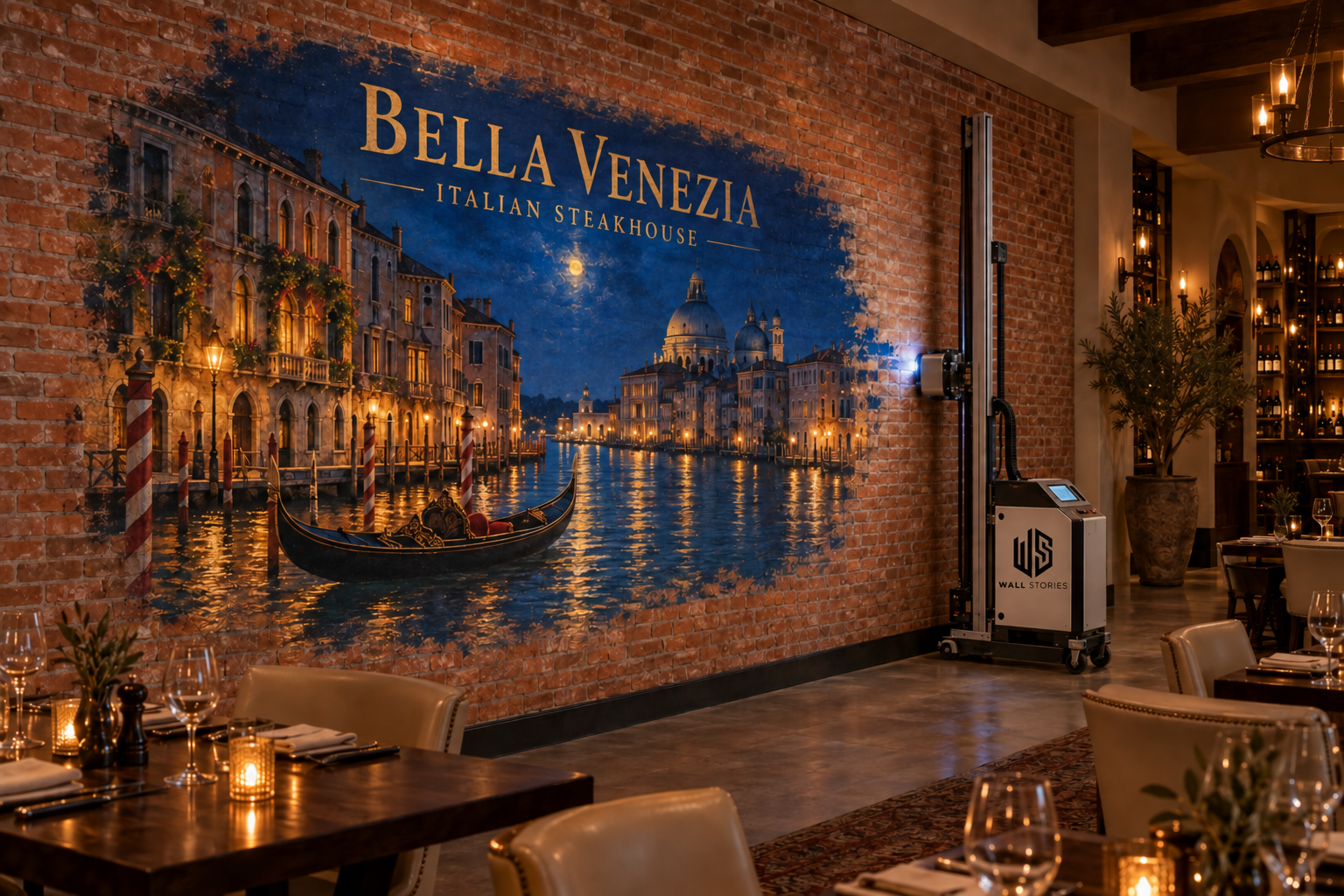
For direct-to-wall printing, Wall Stories plans artwork to feather or fade before the ceiling, floor, left edge, and right edge. Keep faces, lettering, and essential features inside those limits. Gather wall photographs, dimensions, surface details, and fixtures using our preparation checklist.
Build one hospitality mural brief
Include the property’s story, brand guidelines, the intended audience, candidate walls, room layouts, approved imagery, and operational constraints. Identify one person who can coordinate artwork approval across the property team. Ask how each proposed wall will be reviewed and scheduled; do not assume a fixed turnaround.
If several spaces are involved, define a shared palette, illustration style, and level of branding, then vary the scale and detail by location. Our mural quote planning guide can help organize the scope before budgeting.
What story should your hotel walls tell?
Send Wall Stories Creative photographs of the spaces, approximate dimensions, and a few notes about the property and its location. We’ll discuss the creative direction and the information needed to assess the project.
Request a consultation